_chãocéu|
collaboration with Vera Mantero and João Bento« O corpo, mais do que pensar, vagueia em inversões. Em fervuras de sinalisópticos contraditórios. »
_chãocéu| (2024)
Há muitos materiais surgidos no processo de criação da peça O Susto é Um Mundo (2021) que ficaram por explorar e aprofundar, pontas soltas que não se chegaram a agarrar, por falta de tempo ou por não encontrarem o seu lugar no trabalho. Desde 2023 Vera Mantero iniciou um processo de criação de “micro-peças” feitas precisamente a partir da exploração e aprofundamento desses mesmos materiais, juntamente com intérpretes e colaboradores presentes nesse mesmo Susto, primeiro com Teresa Silva e Santiago Tricot em Um pequeno exercício de composição (2023) e agora com Henrique Furtado e João Bento em _chãocéu|
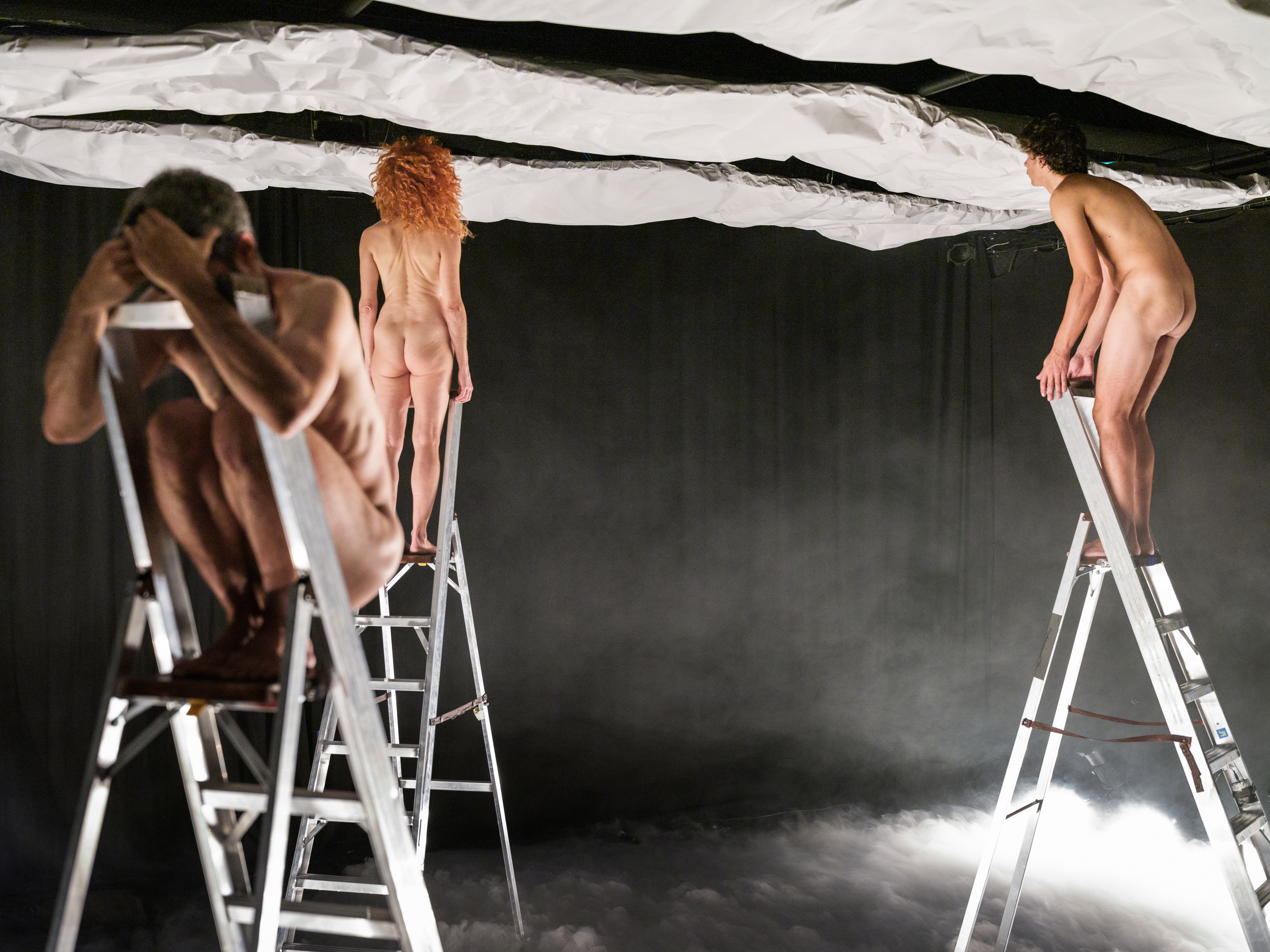
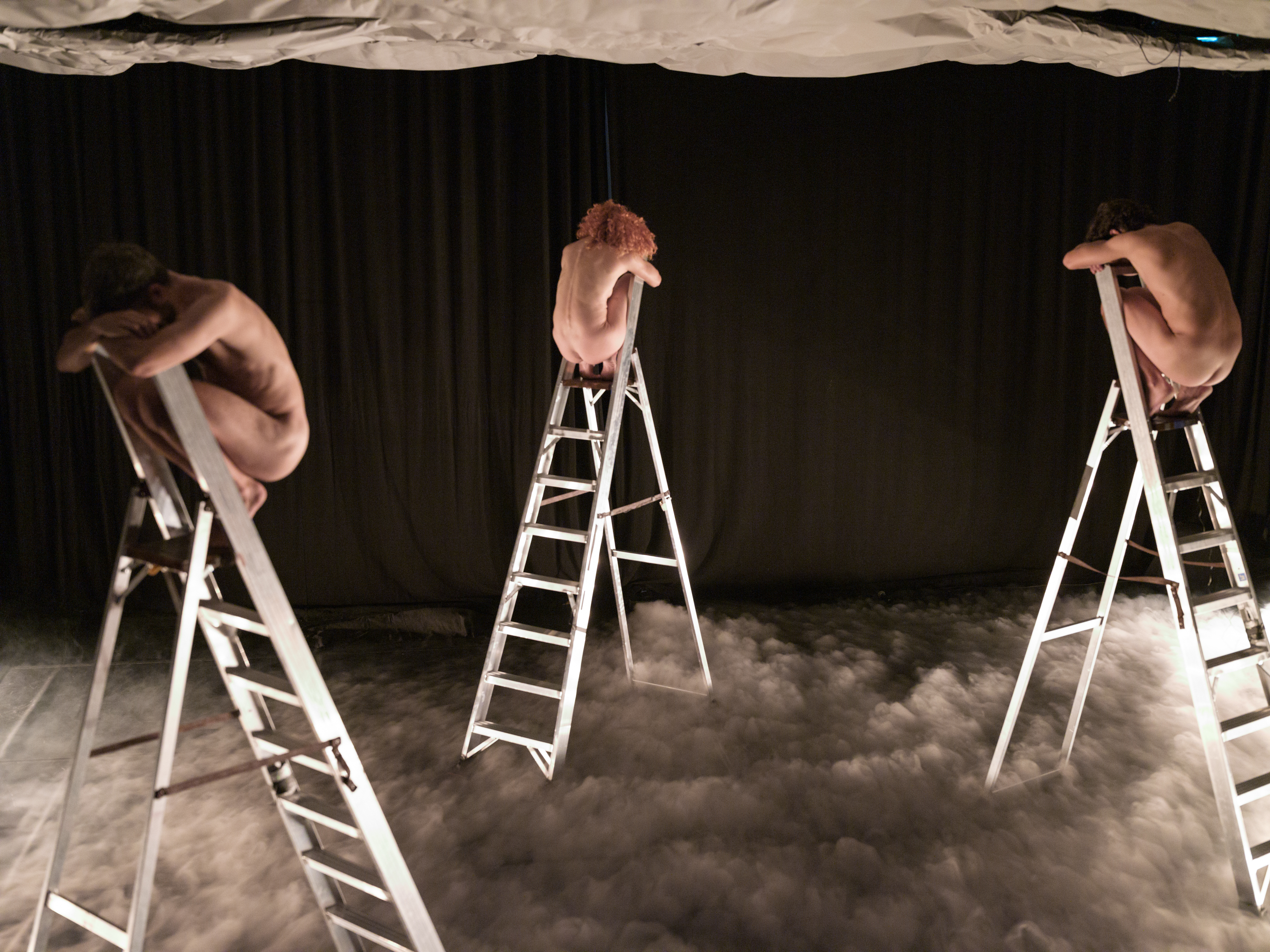
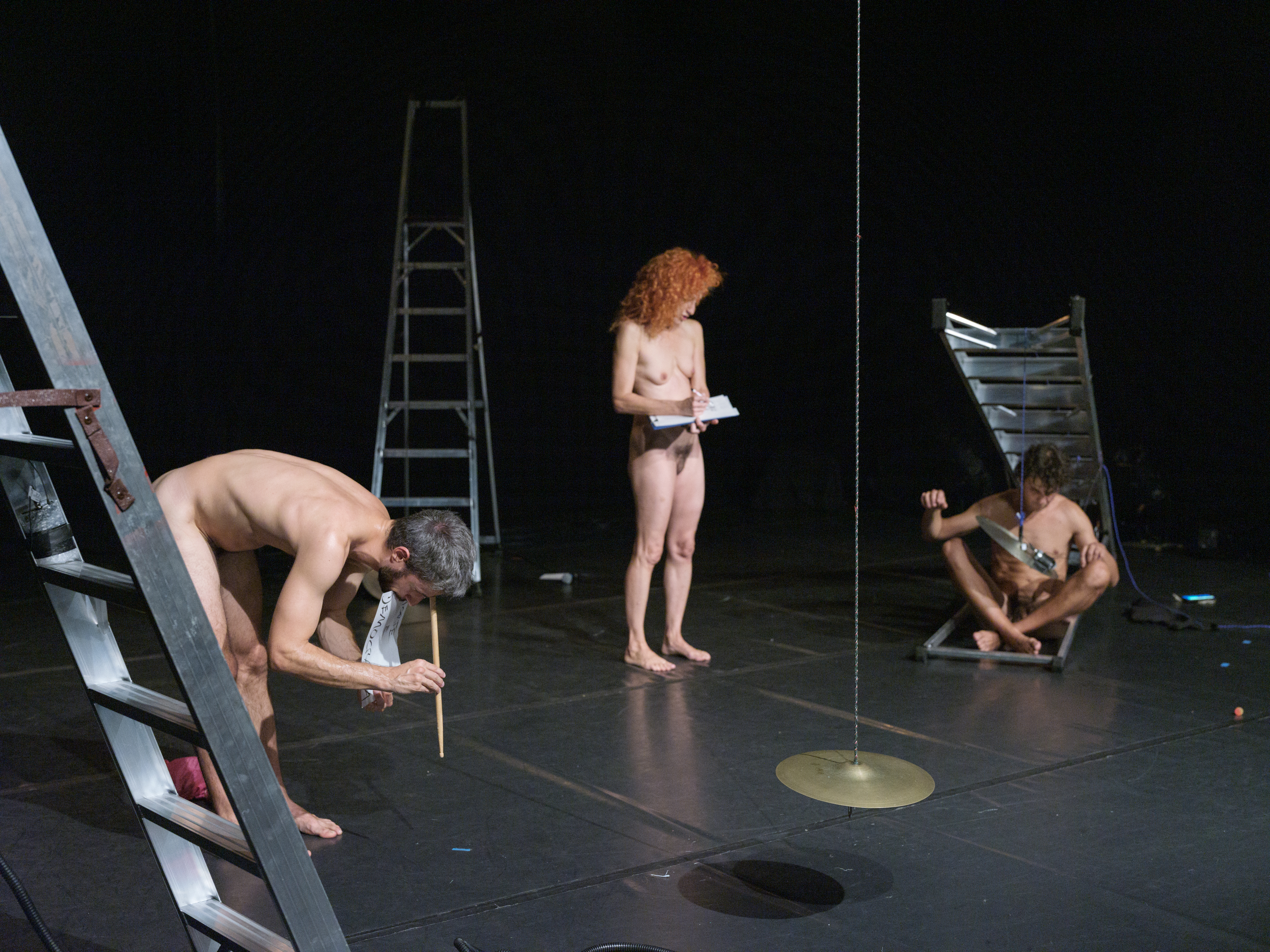
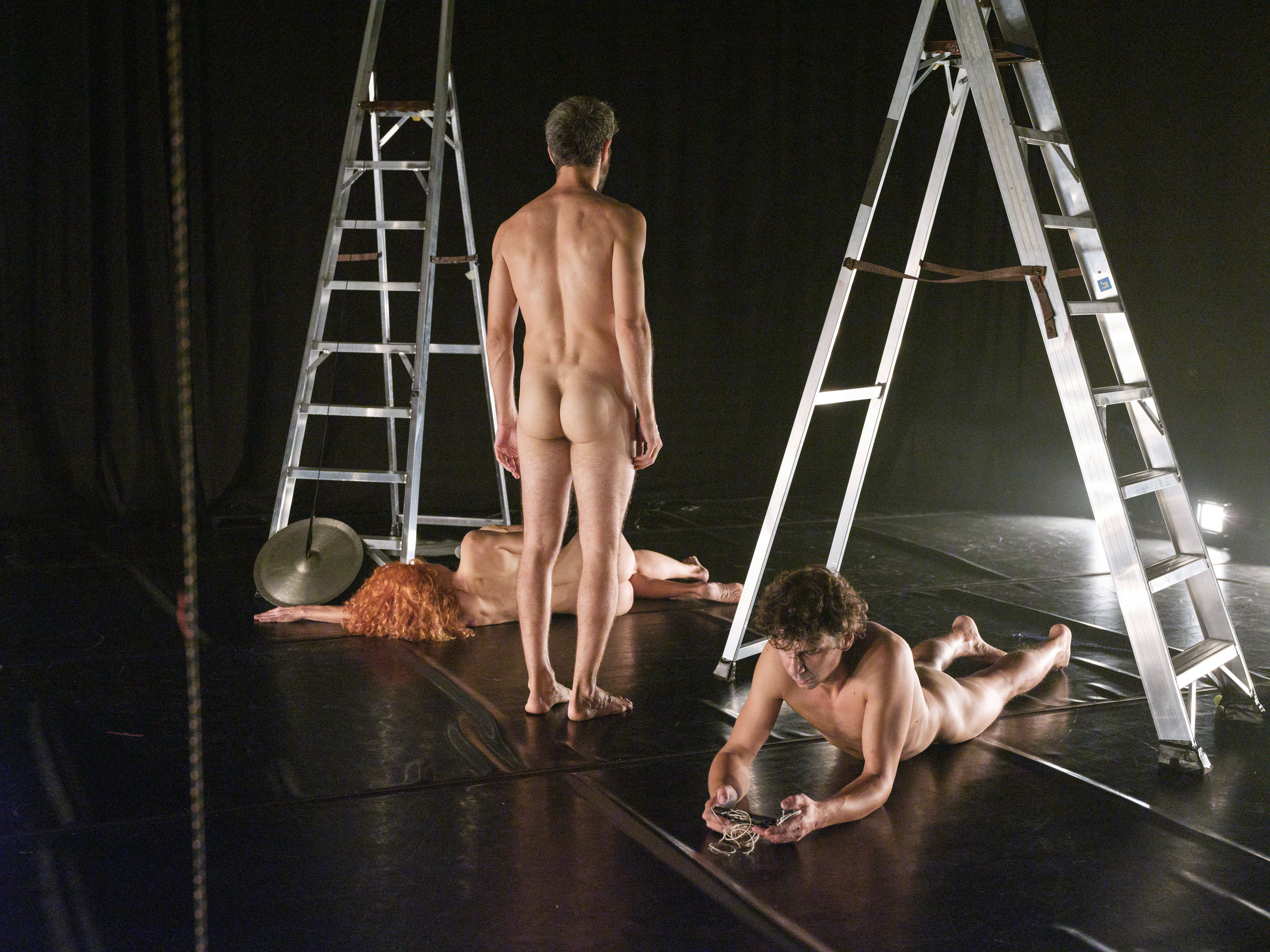
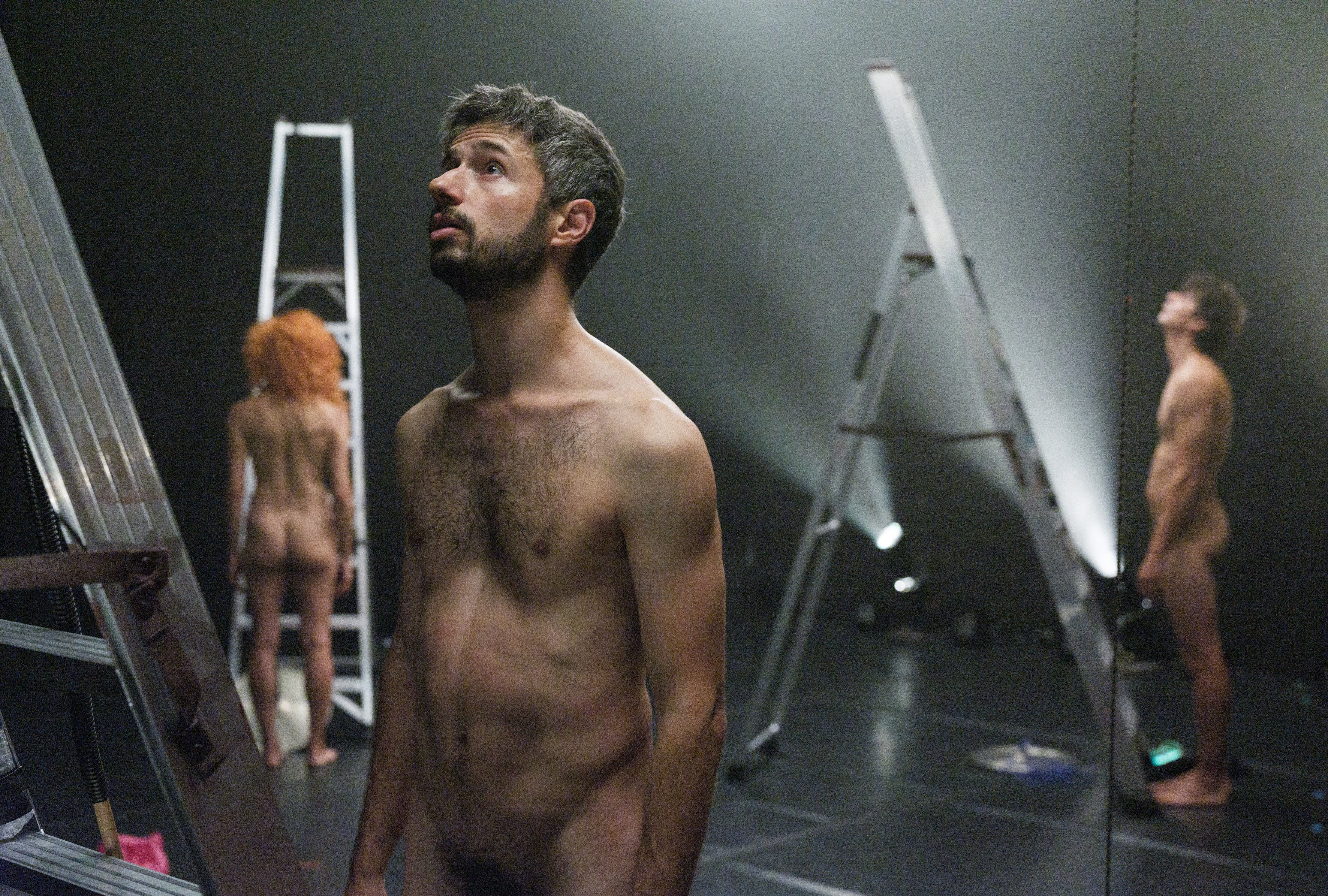
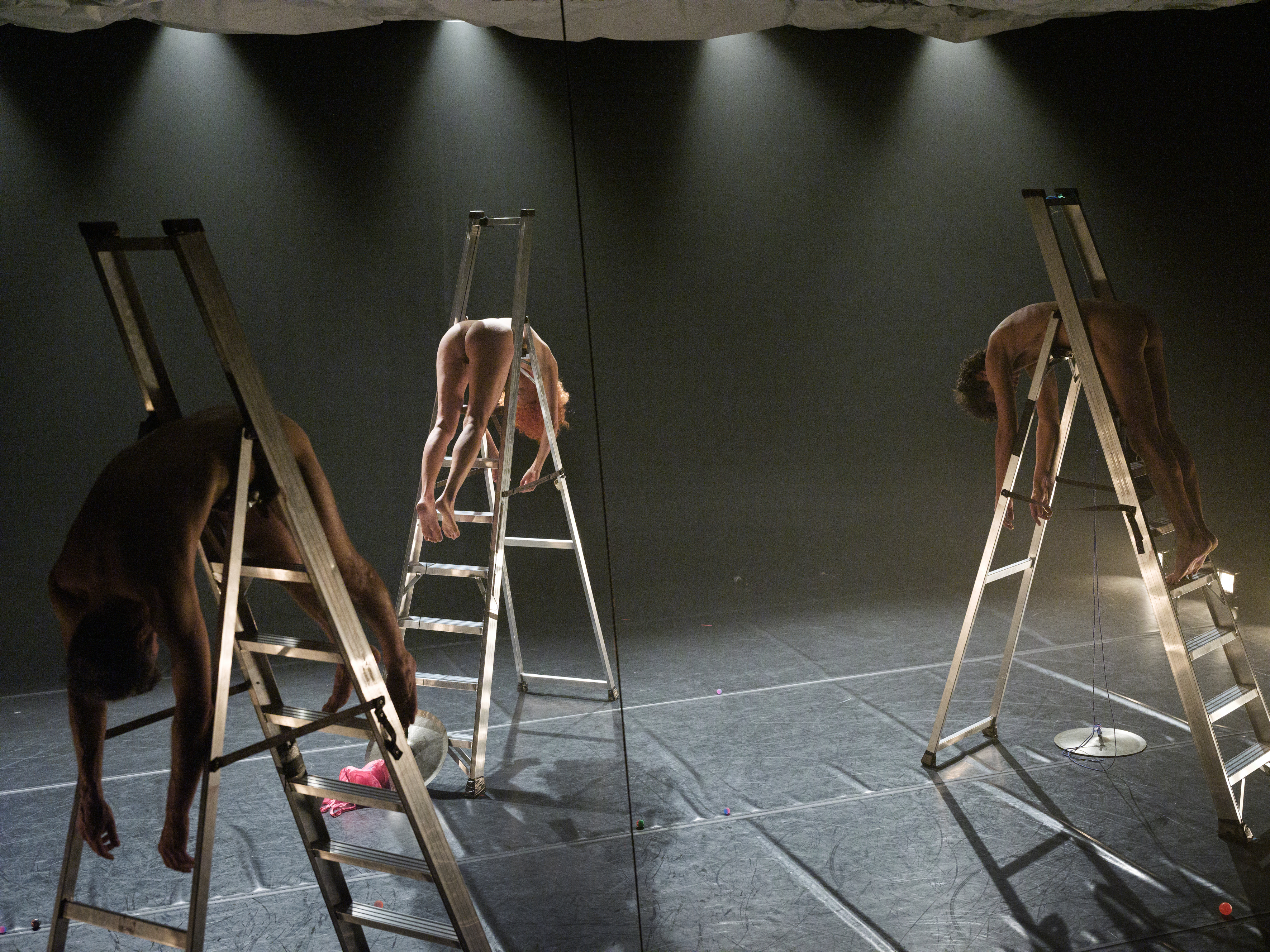
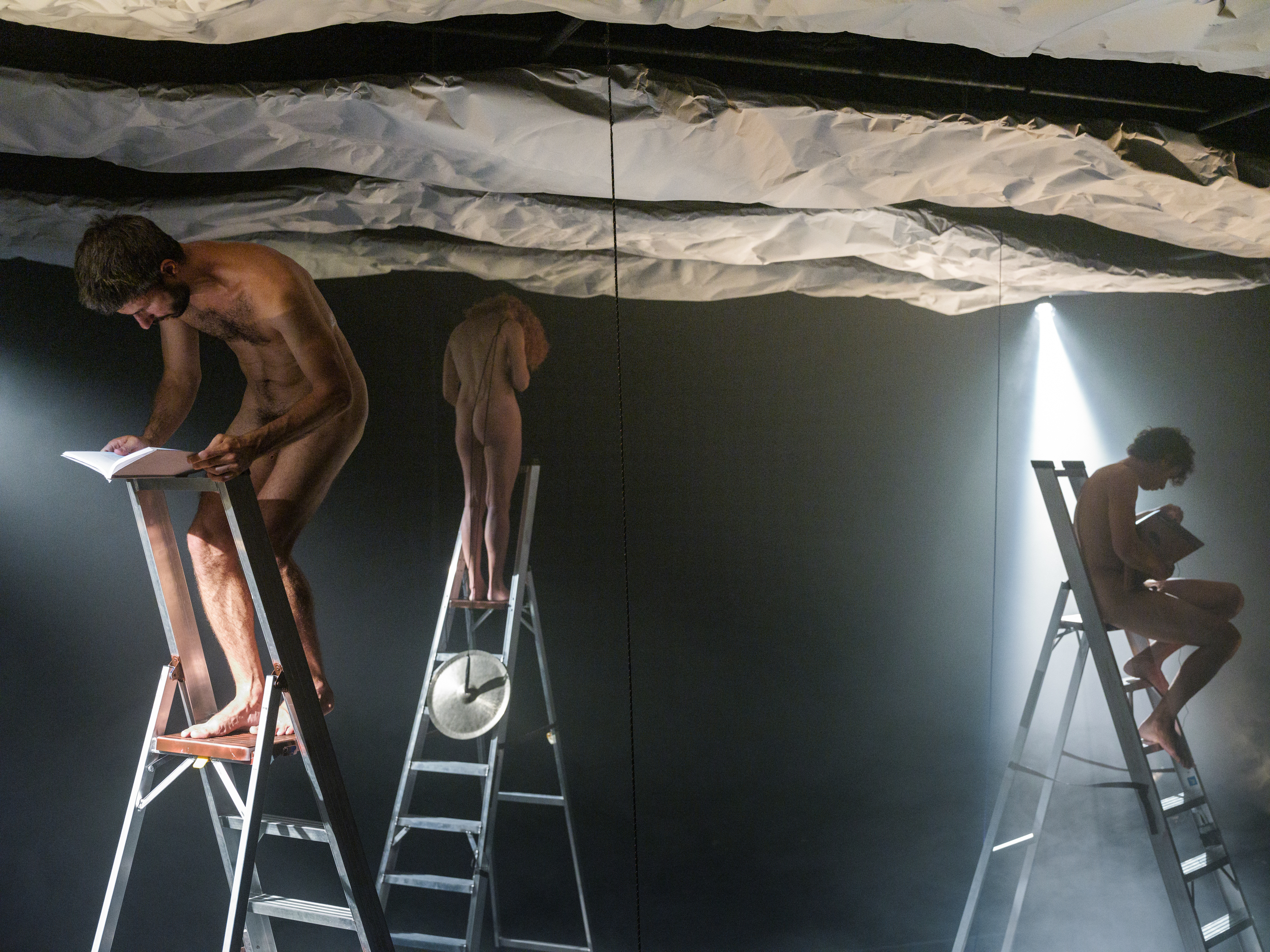
Na primeira dessas micro-peças, um dos elementos presentes na cenografia d’O Susto foi replicado, um anel de ferro de cerca de 2m de diâmetro, e os dois anéis, juntamente com as duas intérpretes, tornaram-se protagonistas centrais desse “... pequeno exercício” austero e praticamente silencioso de sincronia no tempo e geometria no espaço. Em _chãocéu| escolheu-se um outro elemento cenográfico vindo da peça O Susto, mas pouco utilizado nesta, e também aqui multiplicado, agora por três: um escadote. Em O Susto, o escadote surge porque se quis, simbolicamente falando, “tocar nos pés dos deuses”. Em _chãocéu| tentou-se ver como seria isso de facto, como seria tocar nos pés dos deuses e segurar o céu, que está a cair, como todos sabemos. E, assim, os três corpos levitam agora ao alto, obrigando-nos a elevar o olhar. A acção desprende-se do chão, o mundo fica pequeno cá em baixo. Três anjos-pássaros deambulam sobre as nossas cabeças, deixando-nos na inquietação de saber se descerão e nos ajudarão a compreender o tumulto do plano rasante.
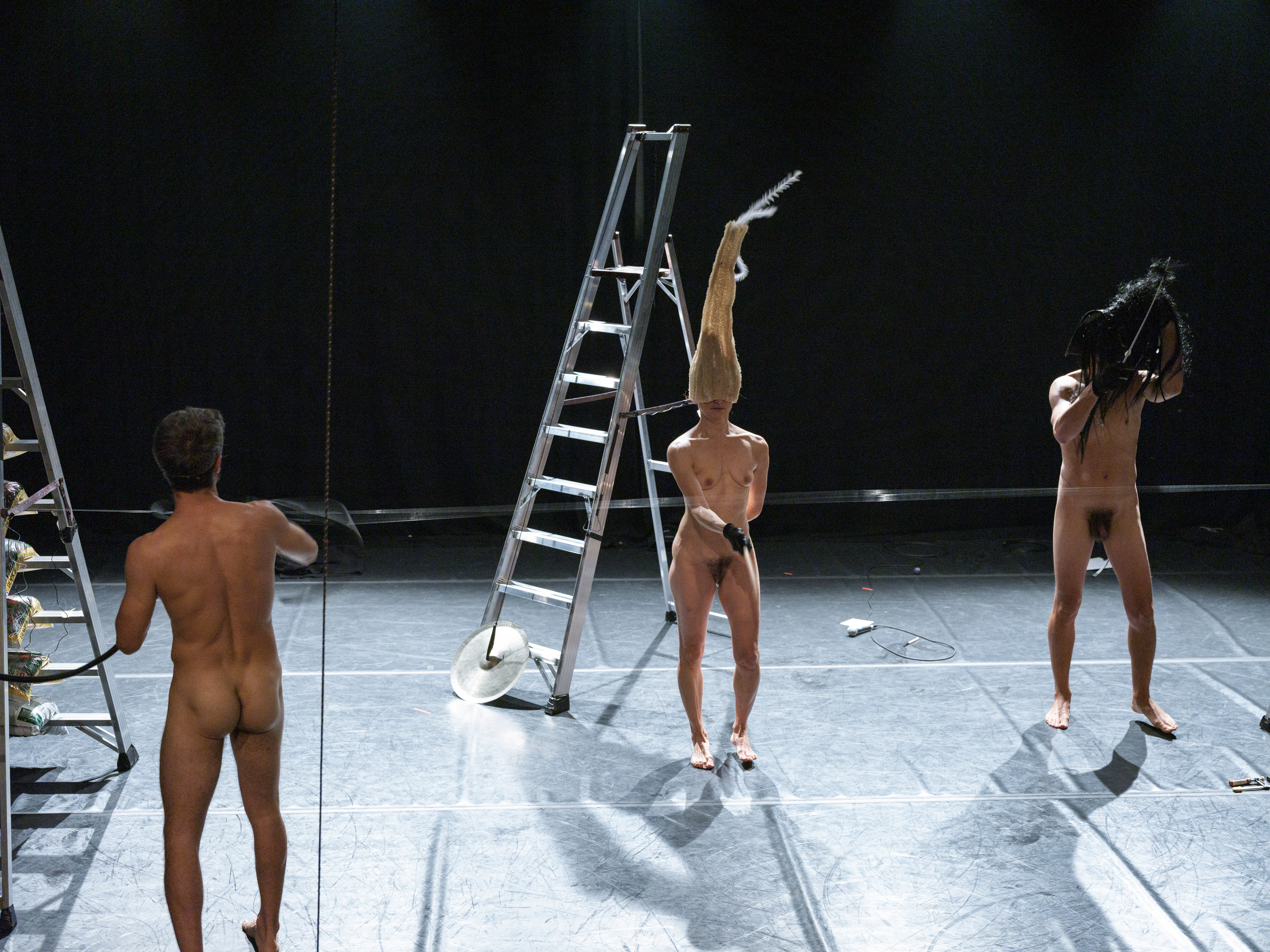
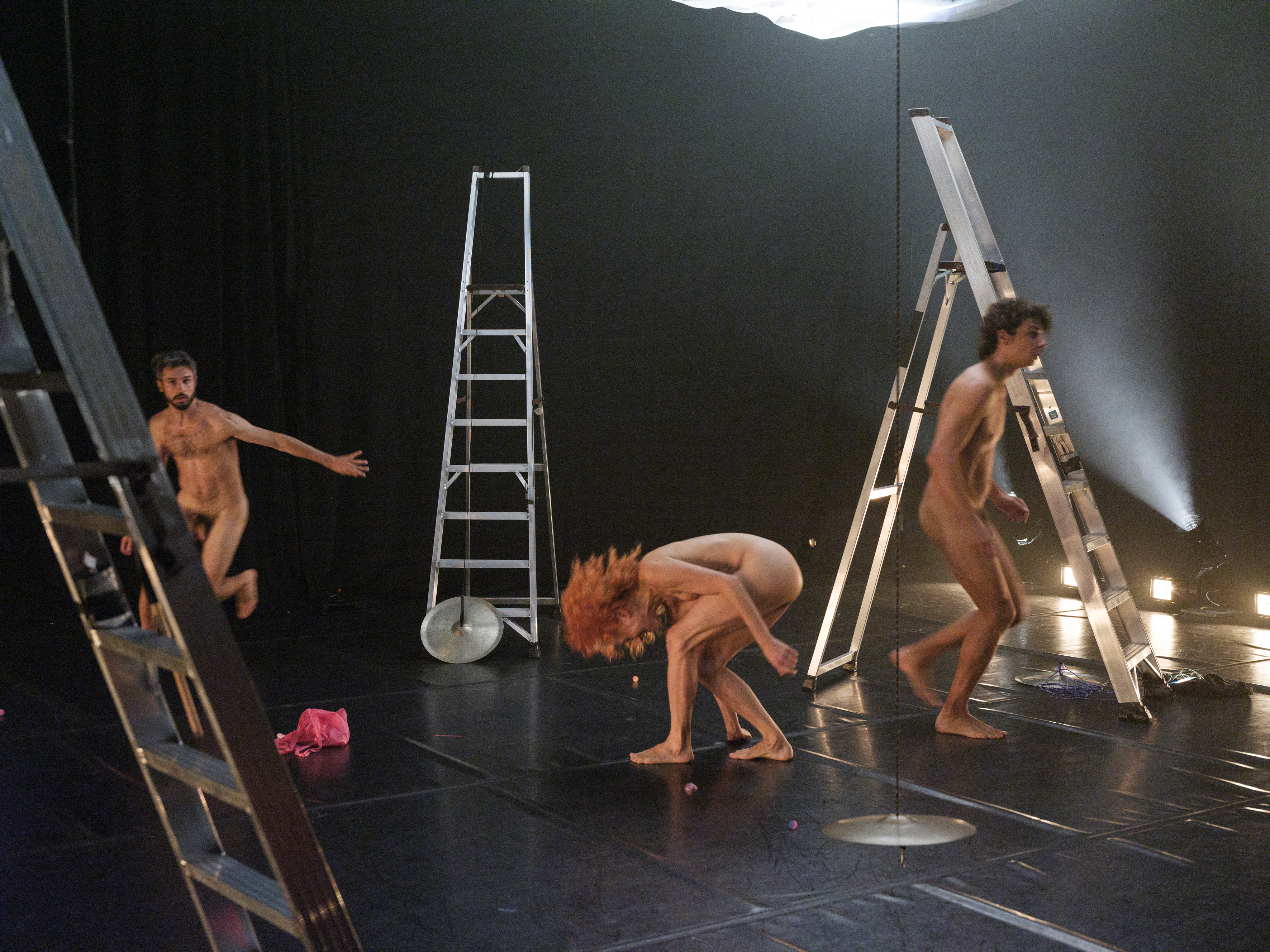
Figuras míticas e fantásticas várias vão surgindo (deusas e deuses, gárgulas, guerreiros e guerreiras…), intermediárias entre o cima e o baixo, praticando acções-tarefas-danças-sons, numa sequência de insólitas relações entre opostos. Novamente o espanto, o sonho, sempre o susto – e uma busca material do inconsciente. Se em O Susto as palavras proferidas pareciam materializar-se em jogos com os objectos cénicos, em _chãocéu| as palavras são já ressonâncias nos próprios corpos-objectos que, com a sua nudez, tentam formar uma outra linguagem nos entalhes de um metal aparentemente imaterial. Em baixo, observamos a agitação das criaturas, o ritmo alucinante, as coisas que, com a sua velocidade multicolorida, chocam umas nas outras, produzindo ruídos que são eles próprios substância, obstáculo.
O mundo continua a espantar, e a assustar, mas agora queremos escutá-lo a partir de uma interioridade que, desacreditada, talvez já não passe pelo humano. Em O Susto dizia-se: “O chão está quieto à minha espera desde que sou gente”. Talvez agora já não seja gente que espera tocar o chão, nem o chão esteja já quieto. Porventura é o céu que quer agora chão, e talvez seja o único a conseguir essa coexistência de opostos, já que nós cá em baixo não a temos conseguido.
_groundsky| (2024)
There is a lot of material that emerged in the process of creating the piece The Fright is a Whole World (2021) that remained to be explored and deepened, loose ends that weren't grasped for lack of time or because they didn't find their place in the work. Since 2023, Vera Mantero has begun a process of creating ‘micro-pieces’ based precisely on the exploration and deepening of these same materials, together with performers and collaborators present in that same The Fright, first with Teresa Silva and Santiago Tricot in A small composition exercise (2023) and now with Henrique Furtado and João Bento in _groundsky|.
In the first of these micro-pieces, one of the elements present in the scenography of The Fright was replicated, an iron ring about 2 metres in diameter, and the two rings, together with the two performers, became the central protagonists of this austere and practically silent ‘... small exercise’ of synchrony in time and geometry in space. In _groundsky|, another scenographic element from The Fright, but less used in this one, was chosen and also multiplied here, now by three: a ladder. In The Fright, the ladder was used because, symbolically speaking, they wanted to ‘touch the feet of the gods’. In _groundsky| we tried to see what that would actually be like, what it would be like to touch the feet of the gods and hold up the sky, which is falling, as we all know. And so the three bodies now levitate upwards, forcing us to lift our gaze. The action lifts off the ground, the world becomes small below. Three bird-angels wander over our heads, leaving us wondering if they will come down and help us understand the turmoil of the shallow plane.
Mythical and fantastic figures appear (goddesses and gods, gargoyles, warriors...), intermediaries between above and below, performing actions-tasks-dances-sounds, in a sequence of unusual relationships between opposites. Again the astonishment, the dream, always the fright - and a material search for the unconscious. If in The Fright the words spoken seemed to materialise in games with the scenic objects, in _groundsky| the words are already resonances in the object-bodies themselves which, with their nakedness, try to form another language in the carvings of an apparently immaterial metal. Below, we can see the agitation of the creatures, the hallucinatory rhythm, the things that, with their multicoloured speed, crash into each other, producing noises that are themselves substance, an obstacle.
The world continues to amaze and frighten, but now we want to listen to it from an interiority that, discredited, perhaps no longer passes through the human. In The Fright someone said: ‘The ground has been quietly waiting for me since I was a person’. Perhaps now it's no longer people who are waiting to touch the ground, nor is the ground already still. Perhaps it's the sky that wants the ground, and perhaps it's the only one that can achieve this coexistence of opposites, since we haven't been able to achieve it.
Oficina "Os objectos de _chãocéu|"
Nesta oficina, os criadores e performers de _chãocéu| partilham com os participantes as histórias, ideias e reflexões sobre alguns objectos que integram a peça. Seja recorrendo aos escadotes, às bolas saltitonas, ao papel comestível ou aos sinos de metal, revelam mais sobre a incorporação de cada objecto nesta criação, procurando despertar o interesse dos participantes ainda antes da apresentação da performance. Os participantes têm a oportunidade de experimentar, eles próprios, situações e experiências performativas em torno destes objectos. Duração: 2 horas.
Workshop “The objects of _groundsky|”
In this workshop, the creators and performers of _groundsky| share with participants stories, ideas and reflections on some of the objects that make up the piece. Whether using ladders, bouncing balls, edible paper or metal bells, they reveal more about the incorporation of each object in this creation, seeking to arouse the interest of participants even before the performance is presented. Participants have the opportunity to experience, for themselves, situations and performative experiences around these objects. Duration: 2 hours
Há muitos materiais surgidos no processo de criação da peça O Susto é Um Mundo (2021) que ficaram por explorar e aprofundar, pontas soltas que não se chegaram a agarrar, por falta de tempo ou por não encontrarem o seu lugar no trabalho. Desde 2023 Vera Mantero iniciou um processo de criação de “micro-peças” feitas precisamente a partir da exploração e aprofundamento desses mesmos materiais, juntamente com intérpretes e colaboradores presentes nesse mesmo Susto, primeiro com Teresa Silva e Santiago Tricot em Um pequeno exercício de composição (2023) e agora com Henrique Furtado e João Bento em _chãocéu|
Na primeira dessas micro-peças, um dos elementos presentes na cenografia d’O Susto foi replicado, um anel de ferro de cerca de 2m de diâmetro, e os dois anéis, juntamente com as duas intérpretes, tornaram-se protagonistas centrais desse “... pequeno exercício” austero e praticamente silencioso de sincronia no tempo e geometria no espaço. Em _chãocéu| escolheu-se um outro elemento cenográfico vindo da peça O Susto, mas pouco utilizado nesta, e também aqui multiplicado, agora por três: um escadote. Em O Susto, o escadote surge porque se quis, simbolicamente falando, “tocar nos pés dos deuses”. Em _chãocéu| tentou-se ver como seria isso de facto, como seria tocar nos pés dos deuses e segurar o céu, que está a cair, como todos sabemos. E, assim, os três corpos levitam agora ao alto, obrigando-nos a elevar o olhar. A acção desprende-se do chão, o mundo fica pequeno cá em baixo. Três anjos-pássaros deambulam sobre as nossas cabeças, deixando-nos na inquietação de saber se descerão e nos ajudarão a compreender o tumulto do plano rasante.
Figuras míticas e fantásticas várias vão surgindo (deusas e deuses, gárgulas, guerreiros e guerreiras…), intermediárias entre o cima e o baixo, praticando acções-tarefas-danças-sons, numa sequência de insólitas relações entre opostos. Novamente o espanto, o sonho, sempre o susto – e uma busca material do inconsciente. Se em O Susto as palavras proferidas pareciam materializar-se em jogos com os objectos cénicos, em _chãocéu| as palavras são já ressonâncias nos próprios corpos-objectos que, com a sua nudez, tentam formar uma outra linguagem nos entalhes de um metal aparentemente imaterial. Em baixo, observamos a agitação das criaturas, o ritmo alucinante, as coisas que, com a sua velocidade multicolorida, chocam umas nas outras, produzindo ruídos que são eles próprios substância, obstáculo.
O mundo continua a espantar, e a assustar, mas agora queremos escutá-lo a partir de uma interioridade que, desacreditada, talvez já não passe pelo humano. Em O Susto dizia-se: “O chão está quieto à minha espera desde que sou gente”. Talvez agora já não seja gente que espera tocar o chão, nem o chão esteja já quieto. Porventura é o céu que quer agora chão, e talvez seja o único a conseguir essa coexistência de opostos, já que nós cá em baixo não a temos conseguido.
_groundsky| (2024)
There is a lot of material that emerged in the process of creating the piece The Fright is a Whole World (2021) that remained to be explored and deepened, loose ends that weren't grasped for lack of time or because they didn't find their place in the work. Since 2023, Vera Mantero has begun a process of creating ‘micro-pieces’ based precisely on the exploration and deepening of these same materials, together with performers and collaborators present in that same The Fright, first with Teresa Silva and Santiago Tricot in A small composition exercise (2023) and now with Henrique Furtado and João Bento in _groundsky|.
In the first of these micro-pieces, one of the elements present in the scenography of The Fright was replicated, an iron ring about 2 metres in diameter, and the two rings, together with the two performers, became the central protagonists of this austere and practically silent ‘... small exercise’ of synchrony in time and geometry in space. In _groundsky|, another scenographic element from The Fright, but less used in this one, was chosen and also multiplied here, now by three: a ladder. In The Fright, the ladder was used because, symbolically speaking, they wanted to ‘touch the feet of the gods’. In _groundsky| we tried to see what that would actually be like, what it would be like to touch the feet of the gods and hold up the sky, which is falling, as we all know. And so the three bodies now levitate upwards, forcing us to lift our gaze. The action lifts off the ground, the world becomes small below. Three bird-angels wander over our heads, leaving us wondering if they will come down and help us understand the turmoil of the shallow plane.
Mythical and fantastic figures appear (goddesses and gods, gargoyles, warriors...), intermediaries between above and below, performing actions-tasks-dances-sounds, in a sequence of unusual relationships between opposites. Again the astonishment, the dream, always the fright - and a material search for the unconscious. If in The Fright the words spoken seemed to materialise in games with the scenic objects, in _groundsky| the words are already resonances in the object-bodies themselves which, with their nakedness, try to form another language in the carvings of an apparently immaterial metal. Below, we can see the agitation of the creatures, the hallucinatory rhythm, the things that, with their multicoloured speed, crash into each other, producing noises that are themselves substance, an obstacle.
The world continues to amaze and frighten, but now we want to listen to it from an interiority that, discredited, perhaps no longer passes through the human. In The Fright someone said: ‘The ground has been quietly waiting for me since I was a person’. Perhaps now it's no longer people who are waiting to touch the ground, nor is the ground already still. Perhaps it's the sky that wants the ground, and perhaps it's the only one that can achieve this coexistence of opposites, since we haven't been able to achieve it.
Oficina "Os objectos de _chãocéu|"
Nesta oficina, os criadores e performers de _chãocéu| partilham com os participantes as histórias, ideias e reflexões sobre alguns objectos que integram a peça. Seja recorrendo aos escadotes, às bolas saltitonas, ao papel comestível ou aos sinos de metal, revelam mais sobre a incorporação de cada objecto nesta criação, procurando despertar o interesse dos participantes ainda antes da apresentação da performance. Os participantes têm a oportunidade de experimentar, eles próprios, situações e experiências performativas em torno destes objectos. Duração: 2 horas.
Workshop “The objects of _groundsky|”
In this workshop, the creators and performers of _groundsky| share with participants stories, ideas and reflections on some of the objects that make up the piece. Whether using ladders, bouncing balls, edible paper or metal bells, they reveal more about the incorporation of each object in this creation, seeking to arouse the interest of participants even before the performance is presented. Participants have the opportunity to experience, for themselves, situations and performative experiences around these objects. Duration: 2 hours
Light design Co-creation by Hugo Coelho and Miguel Cruz
Sound design and music João Bento
Sound operation Rodrigo Martins
Texts Excerpts from ‘Death and Democracy’, ed. Relógio d'Água (2023), by José Gil
Production O Rumo do Fumo
Executive Production and Distribution João Albano / O Rumo do Fumo
Coproduction Teatro José Lúcio da Silva, La Caldera Barcelona
Artistic Residencies Centro Musibéria, DeVIR CAPa, La Caldera Barcelona
Press
Podcast Festival Pedra Dura | Podemos tratar-nos por tu?
with Tiago Mansilha
Bom dia Portugal, RTP
Vera Mantero sobe ao escadote para segurar o céu
Gonçalo Frota, Jornal Público
Teaser
© Mário Negrão
© Luís da Cruz
Support